How Much Cash Do You Really Need to Buy a Home in Florida?

October 7, 2026

Share this article

Getting preapproved for a mortgage is one of the first steps many buyers take before seriously looking at homes. Some real estate agents may require a preapproval before taking you out to look at properties, and sellers may require one to accompany an offer.

A proper preapproval starts with understanding your financial picture. Depending on your situation, that may include reviewing:

  • Income and employment
  • Pay stubs and W-2s
  • Tax returns
  • Bank and investment statements
  • Credit history
  • Existing debts and monthly obligations
  • Down payment and other available funds
  • Other documentation specific to your situation

For some borrowers, the analysis is relatively straightforward. For others, such as self-employed borrowers, business owners, or borrowers with multiple sources of income, it can require considerably more review.

The goal is to determine what financing may be available based on your particular financial circumstances.

Why Get Preapproved Before You Start Shopping?

Getting preapproved early gives you an opportunity to identify potential problems before you have a house under contract.

Maybe additional income documentation is needed. Maybe there is a credit issue that should be addressed. Maybe some of the funds you plan to use for the purchase need additional documentation.

Discovering those things before you find your dream home is a lot easier than discovering them after you've signed a contract.

A preapproval also helps you shop with a better understanding of your financial position rather than falling in love with a house first and trying to make the financing work afterward.

A Preapproval Is a Starting Point - Not a Guarantee

A preapproval is based on the information available at the time it is issued. It doesn't guarantee that you'll ultimately be approved for a particular loan or that every property you choose will qualify for financing.

Your financial circumstances can also change. Taking on new debt, changing jobs, making a large purchase, or moving money between accounts without proper documentation can create additional questions during the loan process.

If something significant changes, talk to your mortgage professional before making the move whenever possible.

The Property Matters, Too

Depending on the property and loan program, the lender may need an appraisal, insurance documentation and other information about the property. Condos and properties with HOA or association considerations can involve additional requirements and review.

That's especially important in Florida, where property type, insurance and association-related issues can play an important role in the transaction.

So being preapproved doesn't necessarily mean that every property will automatically work with your financing.

What Happens When You Find the Right Property?

Once you have a specific property in mind, the numbers can become much more precise.

At Florida Mortgage Advisors, we can review the property-specific figures and tailor your preapproval letter to the particular offer you're making, when appropriate.

Knowing the address allows us to take the available information about that property—including taxes, homeowner's insurance estimate, and HOA or condo dues—and factor those costs into the proposed transaction.

We're no longer looking at just, "What can this borrower qualify for?" We're looking at, "How does this particular property and offer work for this borrower?"

That distinction can be valuable when you're ready to make an offer.

Before you seriously begin looking at homes, you should have a reasonable understanding of:

  • What you may qualify for
  • What monthly payment fits your budget
  • How much cash you'll need for the purchase
  • What documentation you'll need to provide
  • Whether there are any income, credit or asset issues worth addressing

A good preapproval should give you clarity and confidence, not simply a maximum purchase price.

And once you find a property, the process becomes more specific. That's when the actual property, the proposed terms and your financial situation all come together.

A good preapproval isn't just about getting a number. It's about understanding the numbers behind the number—and knowing how those numbers apply to the home you're actually buying.

But a preapproval is more than a letter stating how much you may be able to borrow.

What Goes Into a Preapproval?

Even after you're preapproved, the property itself still needs to meet the requirements of the loan program.

Before You Start House Hunting

Home office desk with three monitors showing dashboards, charts, and a house listing.

One of the first questions many homebuyers ask is, “How much do I need to put down?”

That’s important, but it’s only part of the picture.

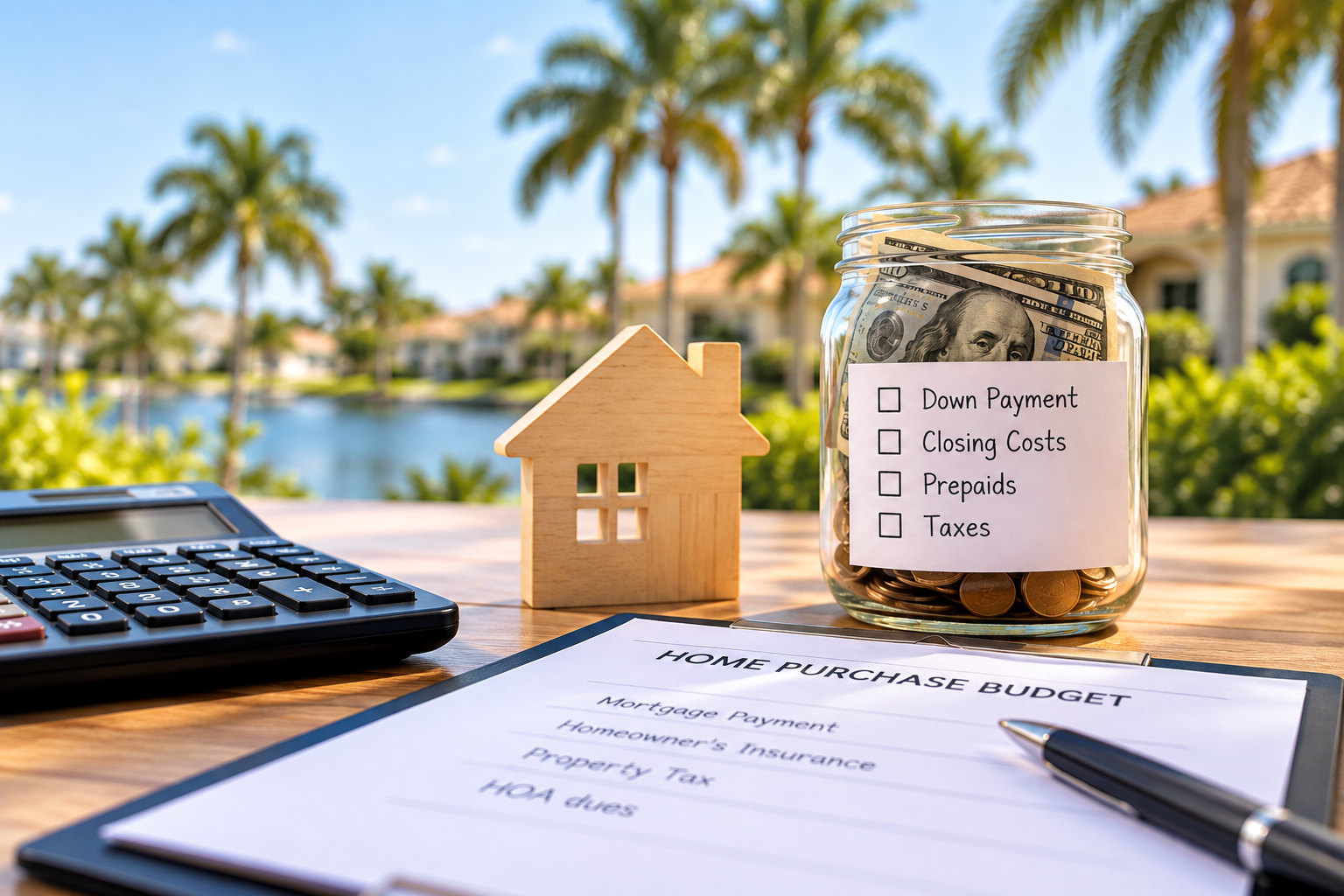
When you buy a home, you may need money for the down payment plus closing costs, prepaid expenses, initial escrow deposits, and other costs associated with completing the purchase.

So before you start seriously shopping, it helps to have a realistic idea of how much cash you may need to have available.

A Practical Starting Point

There is no single percentage that works for every purchase. Closing costs can vary based on the loan program, property, lender, title and settlement charges, taxes, insurance, and other transaction details.

For planning purposes, we think a useful starting point is:

Use about 3% of the purchase price as a baseline, and consider 4% a more comfortable planning number.

That is not a quote or a prediction of your final closing costs. It is simply a practical way to estimate the cash you may want available, in addition to your down payment.

For example, on a $500,000 home:

  • 10% down: $50,000
  • 3% planning amount: $15,000
  • 4% planning amount: $20,000

That puts a rough planning range at $65,000 to $70,000.

With 20% down, the same home might put the planning range closer to $115,000 to $120,000.

Your actual numbers may be lower or higher.

What Are You Paying For?

There is more involved than simply writing a check for the down payment.

Depending on the transaction, your upfront costs may include:

Down payment
The portion of the purchase price you're contributing toward the home.

Lender and settlement costs
These can include loan-related charges, title and settlement services, and other transaction expenses.

Government charges
Florida purchases can involve documentary stamp taxes on the deed, recording fees, and, when applicable, documentary stamp and intangible taxes associated with the mortgage.

Prepaid expenses
These can include prepaid interest and the initial homeowners insurance premium.

Initial escrow deposits
If your loan includes an escrow account, your lender may collect money at closing to establish the initial balance for property taxes and homeowners insurance, along with other applicable expenses.

That’s why “My down payment is $50,000, so I need $50,000” can be a dangerous assumption.

Don't Forget Earnest Money and Credits

Your final Cash to Close also may not equal your down payment plus closing costs.

For example, earnest money you already paid when you signed the purchase contract may be credited toward the transaction.

Seller or lender credits may also reduce the amount of cash you ultimately need to bring to closing, subject to the rules and limits that apply to your loan.

These adjustments are one reason two buyers purchasing similarly priced homes can end up with very different Cash to Close amounts.

Florida Taxes and Insurance Can Change the Math

Florida property taxes deserve particular attention.

A buyer should not automatically assume that the seller’s current tax bill will be the buyer’s future tax bill. A change of ownership can affect the property’s assessed value, and exemptions and other assessment rules can affect the eventual tax amount.

Taxes can also affect the transaction through prorations and escrow deposits.

Homeowners insurance is another major variable. The premium can affect both your monthly payment and the amount of cash needed upfront, particularly when the first year’s premium and an initial escrow deposit are collected at closing.

For both taxes and insurance, property-specific estimates are far more useful than generic statewide assumptions.

Getting a More Precise Estimate

The planning numbers above are useful when you’re just starting to think about buying. Once you have a specific property in mind, the estimate can become much more precise.

At Florida Mortgage Advisors, we can take the information available for that property—including the purchase price, estimated taxes, homeowners insurance, HOA or condo dues, loan program, down payment, and other known costs—and work through a more detailed estimate of the cash you may need.

That fits naturally into the pre-approval process.

Before you make an offer, we want you to have a reasonable understanding of both the monthly payment and the cash you may need to complete the purchase.

Give Yourself Some Breathing Room

There is one more piece that is easy to overlook.

You may technically have enough money to close, but that doesn’t necessarily mean you should spend every available dollar getting there.

Moving expenses, furnishings, repairs, utility deposits, and unexpected expenses can add up quickly after closing.

Before deciding how much cash to put into the purchase, look at the bigger picture—not just the amount needed to get to the closing table.

The Bottom Line

You do not need an exact Cash to Close number when you first start thinking about buying a home.

But you should have a realistic planning range.

As a starting point, consider budgeting approximately 3% of the purchase price for closing and related upfront costs, with 4% providing a little more breathing room , in addition to your down payment.

As you get closer to an actual purchase, that estimate can become much more precise based on the specific property, loan, taxes, insurance, title and settlement charges, credits, and other transaction details.

The goal isn't to know the exact number before you start shopping. It's to know enough to shop with confidence.

Recent Posts

Home office desk with three monitors showing dashboards, charts, and a house listing.
By Florida Mortgage Advisors • September 3, 2026
Getting preapproved for a mortgage is one of the first steps many buyers take before seriously looking at homes. Here's what a preapproval really tells you, and what still matters once you find the right property.
High-rise beachfront condos beside a sandy beach and turquoise ocean under a blue sky
August 11, 2026
Fannie Mae has announced significant updates to condo lending guidelines. These changes are designed to promote the long-term financial health and stability of condo associations-helping to build stronger communities and protect property values for years to come.

July 27, 2026
If you're thinking about buying a home in Florida, you may already be browsing listings, comparing neighborhoods, or wondering what today's interest rates look like. That's exciting—but before you fall in love with a house, there's one conversation that can save you time, reduce stress, and help you make more confident decisions: a conversation with a mortgage advisor. At The Florida Mortgage Advisors, we believe getting a mortgage isn't just about finding a loan. It's about understanding your options and building a plan that fits your financial goals. Every buyer's situation is different. Some are purchasing their very first home. Others are relocating, refinancing, buying a vacation property, or investing in real estate. No matter where you are in your journey, the right advice at the beginning can make the entire process smoother.  One of the most common misconceptions we see is that the first step is finding a home. In reality, understanding your financing first can give you a clearer picture of your budget, the loan programs available to you, and what to expect during the buying process. That knowledge can make shopping for a home much more enjoyable, far less stressful, and with less surprises. Buying in Florida also comes with considerations that do not exist elsewhere. Property insurance, flood zones, condominium requirements, and local market conditions can all influence your financing. Having someone who understands those factors can help you prepare for the road ahead. That's why we created The Florida Mortgage Advisors. We wanted to build a company focused on guidance as much as financing. We know that buying a home is one of the biggest financial decisions most people will ever make, and we believe our clients deserve clear answers, honest communication, and personalized service every step of the way. This article is the first in what we hope becomes a valuable resource for Florida homebuyers. Each month, we'll share practical information about mortgages, home buying, refinancing, market trends, and the questions we hear most often from our clients. Our goal is to make the mortgage process easier to understand so you can make informed decisions with confidence. Whether you're ready to buy now or simply planning for the future, we're glad you found us. We hope you'll visit us often, and when you're ready to talk about your home financing goals, The Florida Mortgage Advisors will be here to help.